Starts off with big improvements in each new version, sometimes even explosively better. Over time the changes become smaller and more incremental. Eventually, each new version ends up being a bit better in some areas and a bit worse in others.
Author: Nicolai Friis
Your Personalized Universal Remote
Imagine an app that could handle most of your day-to-day tasks, a single tool acting as your main access point to the digital world. Instead of jumping between apps, systems, and platforms, you would have one customizable interface that brings everything together. This concept—the universal remote app—promises to simplify digital interaction in a way that works perfectly for you.
A universal remote app acts as a central hub for all your digital activities. All interactions go through this agent app, eliminating the need to manage separate applications and systems. It’s tailored to each individual’s needs, offering a personalized interface that reflects how you work, communicate, and organize your life.
What makes the universal remote unique is its ability to connect to and utilize virtually any app or system. Whether it’s handling your emails, coordinating your schedule, or managing tasks across multiple platforms, this app could seamlessly integrate the tools you use every day. Rather than trying to adapt your routine to match various apps, this app would adapt to you, giving you your own personal gateway to the digital world.
The benefits of this platform are clear. It simplifies your interactions, reduces friction, and helps save time. With fewer distractions and less need to switch between apps, you can focus on what matters most. A customized user interface ensures that using digital tools becomes smoother, enjoyable, and stress-free.
This concept also paves the way for exciting possibilities in the future. Imagine a tool that learns from you over time, anticipating your needs and automating repetitive tasks. The universal remote app isn’t just about making life easier today—it represents a vision for how human interaction with technology can evolve to become more intuitive, productive, and personalized.
The universal remote app puts you at the center of the digital world, empowering you to create a space where technology supports you rather than complicates your life. This is your own personalized remote to the digital universe—an idea that could finally bring clarity to the complex landscape of tools and systems we use every day.
How to Make the Right Decisions
What does it really mean to make the right decision? Often, it’s more about identifying which decisions truly need to be made than focusing on the individual decision itself. Not all problems or situations require a decision, yet many organizations spend significant time and energy debating matters that don’t truly require action.
This tendency to make unnecessary decisions drains an organization’s valuable decision-making capacity. Time and focus that could be spent on high-impact, meaningful decisions are instead used on trivial matters. Over time, this leads to larger, more important choices being neglected or deferred entirely, leaving the organization’s direction unclear. In these cases, no decision is consciously made—it “just happens.”
To avoid this, it’s critical to step back and recognize which decisions truly matter. The right decisions are those that align with the organization’s goals and create meaningful impact. By avoiding unnecessary deliberation and focusing on what matters most, organizations can make better use of their decision-making capacity and direct their efforts where they matter the most.
User Agent = AI
Web applications are evolving to cater to two distinct audiences: humans and language models (LMs) or agents. Developers now have the capability to present different versions of a website depending on whether the user is a human or an agent. This distinction can be made using approaches like media="AI" or User Agent = AI within HTML and HTTP protocols.
When creating a version for agents, the focus shifts away from visual design and toward simplicity and semantics. Agents don’t need to see what humans see. They don’t rely on visual elements like colors, animations, or layouts in the same way a human does. What’s important for them are the semantics: the meaning and functionality behind each element. This enables a more direct and efficient processing of the web content.
Text-based content is preferred for agents because it speeds up processing and provides immediate clarity. While images require additional time and computational effort to analyze, text allows language models to extract meaning instantly. Visual elements, like product images, can still be included but are largely unnecessary unless referenced for human-centered decisions or interactions.
Creating dual versions of a web application benefits both humans and agents. For agents, it enhances their efficiency and ability to perform tasks effectively. For humans, it ensures that the web app retains its visual appeal and usability without compromising performance. This approach doesn’t just optimize how web applications function but also sets the stage for smarter interactions between humans, agents, and digital platforms.
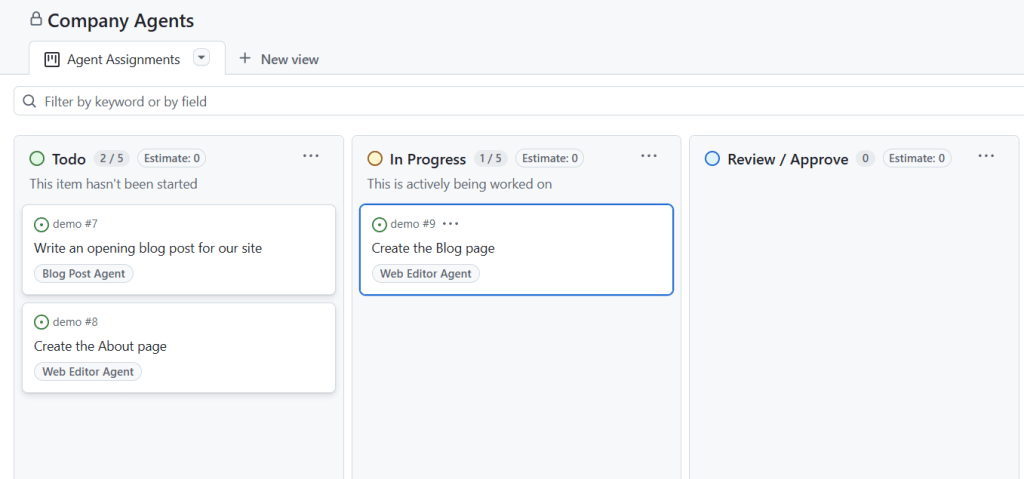
Todo board for Company Agents
Reading Others’ Code
As developers, one of the most effective ways to grow and improve is by reading code written by others. This practice is often overlooked, but it is a powerful method for learning what makes code readable, understandable, and well-structured.
Start by picking small and manageable examples of code. Focus on reviewing code created by others, whether it’s from open-source projects, libraries, or colleagues. Work through the code, line by line, and aim to understand its functionality. Don’t worry if you don’t grasp everything right away—this process is about learning to decode unfamiliar approaches and picking up insights along the way.
Pay attention to the moments when you understand the code easily. What about the names, comments, structure, or logic made it so? Similarly, notice what feels difficult or unclear. This reflection is key to identifying which practices make the code accessible and which may hinder comprehension.
Reading and reflecting on others’ code allows you to develop a deeper awareness of what makes code readable and maintainable. Learn from the clarity you encounter and use those lessons to guide your own coding style. Strive to write code that is easy to understand—not only for your colleagues but for yourself when revisiting your work weeks or months later.
Finally, make code reading a regular habit. The more you expose yourself to different styles and approaches, the better you’ll become at adapting and improving your own practices. Learning from others is an ongoing process, one that can help you grow immensely over time.
Understanding the Strengths and Risks of Language Models
Language models have proven themselves as masters in creating text that seems polished and professional. They are extraordinarily good at appearing competent in their outputs, crafting persuasive responses, and even taking on roles within creative or professional scenarios like actors in a play. These qualities make them incredibly versatile tools for tasks such as storytelling, content creation, and communication.
However, much of their strength lies in their ability to imitate. Language models excel at mimicking reality, generating responses that can feel authentic and convincing. Yet, this skill of “pretending” can be deceptive. While their outputs can seem well-informed, it’s essential to remember that they lack genuine understanding. They generate text based on patterns learned from vast datasets, and their confidence can mask a lack of true comprehension.
This ability to imitate creates a potential pitfall. When relying too much on outputs from these tools, it’s easy to let personal beliefs, hopes, and expectations interfere with judgment. If users treat these suggestions as truths or infallible answers, there’s a risk of misusing them, whether in critical decision-making or emotional reasoning. Humans may inadvertently project their own intentions onto the tool and end up in a trap of unwarranted trust.
The key to avoiding these risks is approaching language models with a critical mindset. What they produce should be seen as helpful hints, not unquestionable facts. Fact-check their results, consult other resources, and always pair their outputs with human expertise. Their value lies in how we choose to use them—when complemented with careful analysis and application, they can be truly transformative tools.
Language models are powerful but are not substitutes for human understanding. Their role is best appreciated when we recognize their strengths as well as their inherent limitations, ensuring that our use of them remains purposeful, thoughtful, and effective.
How to spot AI generated code

How AI apps work
When you ask a question in an app, it might feel like you’re interacting with an expert who knows everything. In reality, there’s a structured process behind the scenes that organizes existing information into a useful response. Let’s break down how these apps work.
The journey begins when you type in your question. The app uses a Small Language Model to extract key terms from your query—essentially identifying the main ideas or keywords. These keywords are then used to perform a regular search engine query on platforms like Google or Bing. The search results are processed by the app, which evaluates summaries of the top 100 hits using another Small Language Model to rank the 10 most relevant pages.
Next, the app crawls the content of those 10 pages, pulling in the most relevant material. This content is combined with your original question to create a detailed context. Finally, this context is sent to a Large Language Model, which generates a polished response that feels complete and confident—almost as if the app itself “knew” the answer.
Though this process may seem intelligent, it’s simply an optimized way of finding, filtering, and presenting information. The system doesn’t actually “know” anything; instead, it mimics understanding by repackaging existing knowledge.
These apps provide a valuable service by streamlining searches. Instead of sifting through endless links yourself, they consolidate information into a single, user-friendly response. This can save time and help with tasks such as brainstorming ideas, summarizing research, or finding information quickly.
Still, there are limitations. The quality of the response depends entirely on the data available and how the app ranks relevance. It’s always worth verifying critical information, as the system may miss nuances or context that you’d notice when manually researching.
Ultimately, language model-powered apps are useful tools that make information easier to access and process. They don’t provide true intelligence, but they can be an efficient way to search, summarize, and communicate ideas. Use them for what they’re good at, and stay thoughtful when evaluating results.
The Future of Domain-Specific Apps: Who Will Shape the Landscape?
App developers are busy leveraging advanced tools, such as language models, to revolutionize the way they build domain-specific applications. These tools are helping improve coding, testing, documentation, security, and general software engineering processes, making app development faster, more efficient, and more reliable. Developers focus on creating scalable, secure, and technically robust applications that meet high standards and long-term needs. However, they often face challenges in deeply understanding the unique requirements and workflows of specific domains.
At the same time, domain experts are bypassing developers altogether to build their own applications. Equipped with deep knowledge of their fields and a clear understanding of what works and what they want, these professionals are creating solutions tuned specifically to their needs. They care about functionality and outcomes, not about how the underlying code is written. Thanks to the rise of user-friendly tools, such as no-code and low-code platforms, they can build apps quickly without relying on software development teams. While their solutions are practical and tailored, they can face limitations in areas like scalability, security, and technical refinement.
This divide between app developers and domain experts raises an important question. Who will take the lead in shaping domain-specific apps? Will app developers prevail with their technical precision and ability to scale solutions? Will domain experts win through their intimate knowledge of what matters in their industries? Or perhaps the future belongs to those who can do both—combining software engineering expertise with domain insight to bridge the gap.
The most promising path forward may lie in collaboration. When app developers and domain experts work together, they can create applications that combine technical robustness with tailored functionality. App developers can help build solid infrastructures, while domain experts provide the insights needed to create tools that truly solve practical problems. Another possibility is the emergence of hybrid creators—individuals skilled in both software development and domain-specific knowledge, capable of weaving together the strengths of both groups.
Rather than focusing on which group “wins,” the future of domain-specific apps is about leveraging the best of both worlds. Innovation will thrive when technical expertise and domain knowledge come together, ensuring apps can meet immediate needs while remaining scalable, secure, and impactful over time. The opportunities are immense, and success belongs to those willing to embrace collaboration or develop hybrid approaches that serve both technical and domain goals.

